Listen to this article
Best App That Turns Lecture Audio into Notes: Student Comparison Guide
Finding the best app that turns lecture audio into notes can save students hours of replaying recordings, pausing videos, and rewriting class material by hand. The right tool can turn lecture recordings into organized notes, summaries, key terms, and study-ready outlines, but not every platform handles classroom audio equally well. Some are better for live lectures, some for recorded lessons, and some focus more on transcription than real learning support. This comparison guide explains what students should look for in a lecture audio to notes app, how AI notes from lecture audio differ from basic transcripts, and which features matter most for accuracy, review, and exam prep.
Key takeaways
- The best app that turns lecture audio into notes should do more than transcribe; it should organize ideas into clear summaries, headings, and key points.
- Students should compare transcription accuracy, speaker recognition, editing tools, and export options before choosing an app for recorded lectures.
- A strong lecture audio to notes app helps with both live class recordings and uploaded audio from past lectures, podcasts, or review sessions.
- AI notes from lecture audio are most useful when combined with flashcards, summaries, search, and study features that support revision.
What students should expect from an app that turns lecture audio into notes
A useful app that turns lecture audio into notes should help students move from raw classroom audio to understandable study material quickly. At a minimum, the app should convert speech to text with good accuracy, even when lectures include technical terms, fast speaking, or multiple speakers. Beyond transcription, the best tools identify major themes, break content into sections, and generate concise notes that are easier to review than a full transcript. For students, this matters because most class recordings are too long and dense to revisit before every quiz or exam. A high-value tool should also let users highlight important moments, correct errors, search by keyword, and export notes to common formats like PDF, Google Docs, or note apps. If the tool only gives a wall of text, it may save typing time but still create extra work during revision.
How to compare lecture audio to notes app features
When comparing a lecture audio to notes app, students should look at five core areas: input flexibility, note quality, study support, usability, and privacy. Input flexibility includes whether the app can record live lectures, upload MP3 or video files, and process app for recorded lectures from platforms students already use. Note quality means more than transcription accuracy; it includes summaries, bullet points, headings, action items, key terms, and whether the AI captures the real meaning of the lecture. Study support matters because students benefit most when notes can be converted into flashcards, quizzes, or review sheets. Usability includes mobile access, quick editing, and how easy it is to revisit the original audio beside the notes. Privacy is especially important for students recording classes, so they should review whether the tool stores recordings securely and whether sharing settings are clear.
Difference between transcripts and AI notes from lecture audio
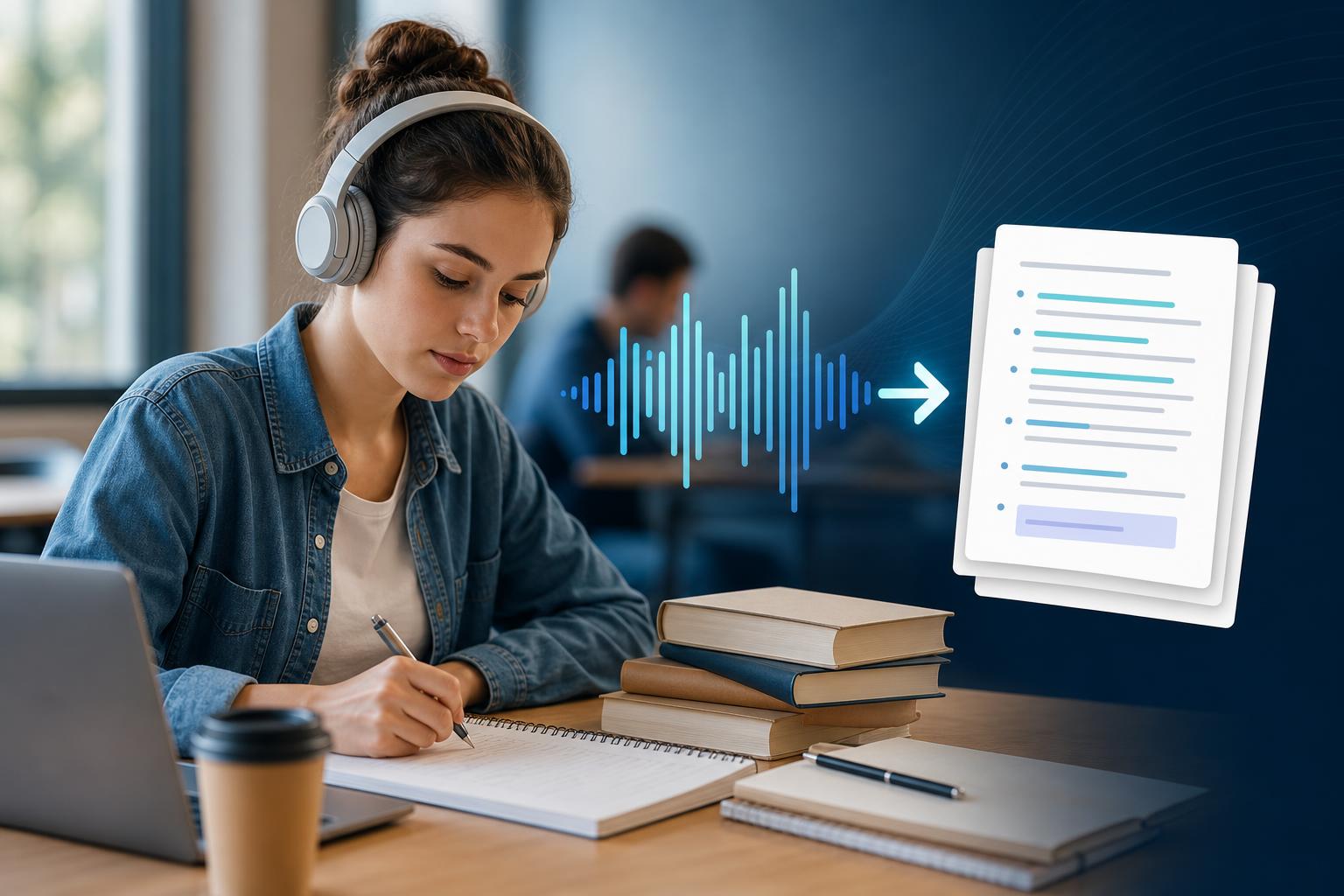
Many students assume that a transcript and notes are the same thing, but they serve different purposes. A transcript is a near word-for-word record of what was said. That can be helpful for accuracy, but it often includes repetition, filler language, side comments, and long explanations that are hard to scan. AI notes from lecture audio go a step further by extracting the structure and meaning of the lecture. Instead of showing every sentence, the tool condenses the material into major concepts, definitions, examples, and takeaways. For example, a biology lecture transcript might contain a long explanation of photosynthesis, while AI-generated notes would likely turn that into a short definition, process steps, and exam-relevant vocabulary. For students short on time, notes are usually more practical than raw transcripts, though the best apps let users access both.
Best use cases for students choosing an app for recorded lectures
An app for recorded lectures can help in several common student situations. First, it is useful for reviewing long lecture captures before exams, especially when students need to identify the most testable points quickly. Second, it supports students who miss class and need to turn shared recordings into usable notes without spending hours replaying the file. Third, it helps multilingual learners or students in fast-paced courses by making spoken content easier to revisit in written form. Fourth, it can turn tutoring sessions, group study recordings, and seminar discussions into organized study documents. Students in content-heavy courses often benefit most from tools that combine class audio to notes with search, summarization, and flashcard generation. In a comparison, the strongest products are the ones that reduce review time while improving comprehension, not just the ones that produce the longest transcript.
Flashcards
What is the main purpose of an app that turns lecture audio into notes?
It converts spoken lecture content into organized, reviewable notes for studying.
What is the difference between a transcript and AI notes from lecture audio?
A transcript records nearly everything said, while AI notes summarize and organize the main ideas.
Why is transcription accuracy important in a lecture audio to notes app?
Poor accuracy can distort definitions, examples, and technical terms that students need for exams.
What feature helps students review a long lecture quickly?
AI summaries with headings, bullet points, and key takeaways help students scan content fast.
Why are export options useful in a class audio to notes tool?
They let students move notes into study apps, documents, or shared class materials.
What kind of student benefits most from an app for recorded lectures?
Students handling long recordings, missed classes, dense subjects, or fast-paced lectures benefit the most.
Why is privacy a factor when choosing a lecture note app?
Students need to know how recordings are stored, shared, and protected.
What extra feature makes an AI lecture note app more useful for exam prep?
Built-in flashcards, quizzes, or study guides make the notes more actionable for revision.
Quiz
1. Which feature best separates an AI lecture note app from a basic transcription tool?
- A. Word-for-word recording only
- B. Automatic note organization and summarization
- C. Audio volume control
- D. Dark mode themes
Show answer
Answer: Automatic note organization and summarization
The biggest difference is that AI-powered tools transform raw speech into structured notes, not just text.
2. What should students check first when comparing an app that turns lecture audio into notes?
- A. Sticker packs
- B. Transcription accuracy and note quality
- C. Wallpaper settings
- D. Game features
Show answer
Answer: Transcription accuracy and note quality
If the app cannot accurately capture lecture content or generate useful notes, other features matter much less.
3. Why might a full transcript be less helpful than AI notes for exam review?
- A. It always deletes key concepts
- B. It is usually longer and harder to scan quickly
- C. It cannot include spoken words
- D. It only works offline
Show answer
Answer: It is usually longer and harder to scan quickly
Transcripts often include filler and repetition, while AI notes condense the material into study-friendly points.
4. Which student use case fits an app for recorded lectures best?
- A. Turning a missed class recording into review notes
- B. Improving internet speed
- C. Editing video special effects
- D. Building a slideshow theme
Show answer
Answer: Turning a missed class recording into review notes
One of the strongest use cases is quickly converting missed or shared lecture recordings into usable notes.
5. What added feature makes class audio to notes tools more valuable for studying?
- A. Flashcard and quiz generation
- B. Weather updates
- C. Music streaming
- D. Photo filters
Show answer
Answer: Flashcard and quiz generation
Study features like flashcards and quizzes help students actively review the notes instead of only reading them.
FAQs
What is the best app that turns lecture audio into notes for students?
The best option depends on whether you need live recording, uploaded lecture support, strong summaries, or built-in study tools. Students should prioritize apps that combine accurate transcription with organized notes, easy editing, and review features like flashcards or quizzes.
Can a lecture audio to notes app work with recorded classes?
Yes. Many tools allow students to upload saved lecture audio or video files and convert them into transcripts and notes. This makes them useful for missed classes, online course recordings, and revision before exams.
Are AI notes from lecture audio accurate enough for studying?
They can be very useful, but students should still review the output, especially for technical subjects, formulas, names, and specialized vocabulary. The best approach is to use AI notes as a strong first draft, then edit and confirm key details.
Turn lectures into study-ready notes
AI Study Assistant helps you go beyond transcription by turning lecture recordings into clear notes, summaries, and revision materials faster. If you are comparing tools in this article, start with a platform built for real student study workflows.

Leave a Reply