Listen to this article
Best Way to Study From Recorded Lectures Before an Exam
The best way to study from recorded lectures before an exam is to avoid rewatching everything passively and instead turn each recording into a focused review system: identify what will be tested, create concise notes, mark confusing concepts, practice active recall, and quiz yourself until weak areas improve. If you have a backlog of lectures, AI Study Assistant can help reduce review time by generating transcripts, summaries, notes, flashcards, and practice quizzes from your own recordings so you can study the most important material first.
Key takeaways
- Do not rewatch every recorded lecture at normal speed unless you are missing the entire topic; use transcripts, summaries, and timestamps to review faster.
- Start exam prep by mapping each lecture to the exam topics, textbook chapters, problem types, or study guide sections your teacher emphasized.
- Convert lecture notes into active recall tools such as flashcards, short-answer prompts, and practice quizzes instead of rereading summaries repeatedly.
- Use quizzes to find weak areas, then return to the exact lecture segment or transcript section where that concept was taught.
- AI Study Assistant can turn lectures into summaries, notes, flashcards, and quizzes, helping high school and college students review class recordings more efficiently.
1. Start With an Exam-Focused Lecture Triage
When you have several recorded lectures to review, the first step is deciding what deserves your time. List every lecture recording, then label each one as high, medium, or low priority based on the exam guide, syllabus, homework, teacher comments, and topics that appeared in class discussions. High-priority lectures cover material that is likely to appear on the exam or that you still do not understand. Medium-priority lectures contain supporting details or examples. Low-priority lectures may be background, review, or content you already know well. This triage step is the fastest way to avoid wasting hours. Instead of asking, "How can I rewatch all of this?" ask, "Which lecture segments will most improve my exam score?" If you use AI Study Assistant, upload or record your lectures and generate summaries so you can scan the main points before choosing what to study deeply.
2. Review Recordings Fast With Transcripts, Summaries, and Timestamps
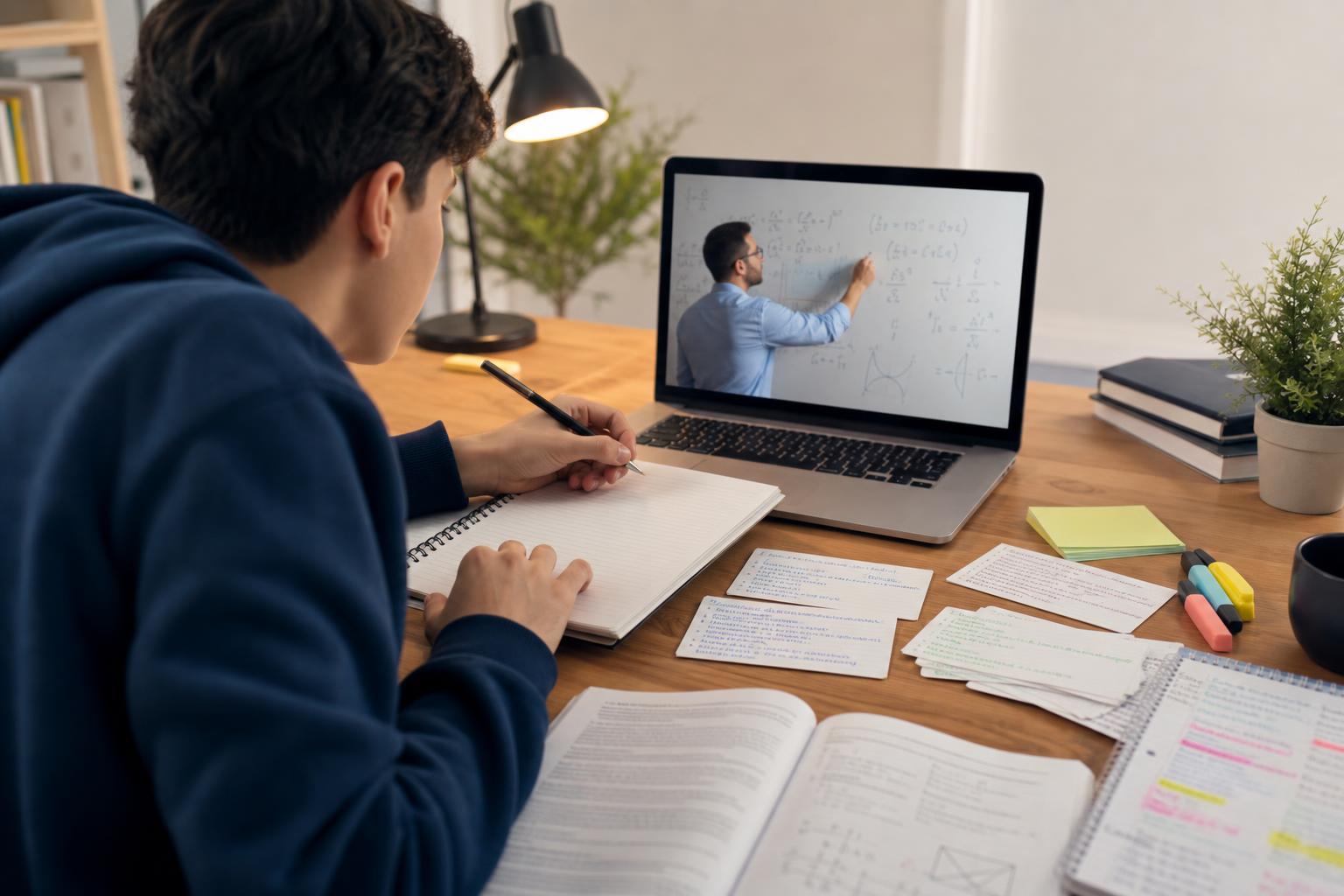
The most efficient method for how to review lecture recordings fast is to use the transcript and summary first, then only replay the sections that need attention. Reading a transcript is often faster than rewatching an entire lecture, especially when you are searching for definitions, formulas, dates, case studies, or steps in a process. A good workflow is: read the AI-generated summary, scan the transcript headings or key points, highlight unfamiliar terms, and then jump to the relevant timestamp in the recording. Play difficult sections at normal speed and easier sections at 1.25x or 1.5x speed. Pause only when you need to solve a problem, write an example, or clarify a confusing point. This turns recorded lectures into targeted exam prep from class recordings instead of passive review.
3. Turn Lecture Notes Into a Test Review Sheet
After identifying the important parts of each recording, condense them into a test review sheet. Your review sheet should not be a full transcript. It should include the concepts most likely to be tested: key definitions, formulas, cause-and-effect relationships, steps in a process, important examples, common mistakes, and any teacher hints such as "this is important" or "you should know this for the exam." For lecture notes for test review, use a simple structure: topic, what it means, why it matters, example, and how it may be tested. For math or science courses, add sample problem types and solution steps. For history, literature, or social science courses, add themes, comparisons, evidence, and possible short-answer prompts. AI Study Assistant can generate notes from your recordings so you can edit and personalize them instead of starting from a blank page.
4. Use Flashcards for Active Recall, Not Just Memorization
Flashcards are effective because they force you to retrieve information without looking at the answer. The best flashcards from recorded lectures focus on testable knowledge: definitions, formulas, vocabulary, dates, theories, diagrams, steps, and distinctions between similar concepts. Avoid making cards that are too broad, such as "Explain the whole lecture." Instead, use specific prompts like "What are the three stages of cellular respiration?" or "What does marginal cost measure?" Study flashcards in short rounds. First, answer each card without looking. Second, sort cards into know, unsure, and missed. Third, restudy only the unsure and missed cards. This is much faster than rereading all lecture notes. With AI Study Assistant, you can turn lectures into flashcards automatically, then add your own cards for anything your teacher emphasized.
5. Turn Lectures Into Quizzes and Practice Like the Exam
The strongest exam preparation happens when you test yourself before the real test. After reviewing a recording, create a short quiz from that lecture. Include multiple-choice questions, short-answer questions, problem-solving prompts, and explanation-based questions depending on the class. The goal is not just to recognize the right answer but to prove you can recall, apply, and explain the material. When you turn lectures into quizzes with AI Study Assistant, use your quiz results as a study map. If you miss questions about one concept, return to that lecture summary, transcript section, or timestamp. Then retake similar questions until your score improves. This creates a loop: review, quiz, diagnose, restudy, and quiz again. That loop is usually more effective than watching a lecture twice.
6. Build a 48-Hour Recorded Lecture Exam Plan
If your exam is soon, use a compressed plan. In the first study block, upload your recordings and generate summaries, notes, flashcards, and quizzes. In the second block, scan summaries and rank lectures by importance. In the third block, study high-priority lecture notes and make sure you understand the examples. In the fourth block, answer quizzes without notes. In the fifth block, restudy missed questions and replay only the confusing segments. The night before the exam, do not try to rewatch every lecture. Review your condensed notes, run through flashcards, and take one cumulative quiz. Focus on errors, not on material you already know. On exam morning, quickly review formulas, key terms, and missed quiz questions. This strategy helps you use recorded lectures as a high-efficiency exam prep tool instead of a last-minute time sink.
Flashcards
What is the best way to study from recorded lectures before an exam?
Use an active review system: prioritize exam-relevant lectures, scan summaries and transcripts, make concise notes, practice with flashcards, and quiz yourself on weak areas.
Why is passively rewatching every lecture usually inefficient?
It takes too much time and often feels familiar without proving that you can recall or apply the material on the exam.
What should you do before reviewing a backlog of lecture recordings?
Rank each lecture by exam importance using the study guide, syllabus, homework, teacher hints, and your own weak areas.
How can transcripts help you review lecture recordings fast?
Transcripts let you search, scan, and jump to specific concepts faster than watching the entire recording from beginning to end.
What should a test review sheet from lecture notes include?
It should include key concepts, definitions, formulas, examples, common mistakes, and likely exam question types.
What makes a good flashcard from a recorded lecture?
A good flashcard asks one specific testable question and requires active recall before the answer is shown.
How should you use quiz results during exam prep from class recordings?
Use missed questions to identify weak topics, then return to the related notes, transcript, or lecture timestamp for focused restudy.
What is the review-quiz-diagnose loop?
It is a study cycle where you review material, take a quiz, identify mistakes, restudy weak areas, and quiz again.
How can AI Study Assistant reduce review time for recorded lectures?
It can generate transcripts, summaries, notes, flashcards, and quizzes from uploaded or recorded lessons so you can study targeted materials faster.
What should you focus on the night before an exam if you have recorded lectures?
Focus on condensed notes, missed quiz questions, flashcards, and only the most confusing lecture segments rather than rewatching everything.
Quiz
1. Which strategy is usually the best first step when you have many recorded lectures before an exam?
- A. Rewatch every lecture at normal speed
- B. Rank lectures by exam relevance and difficulty
- C. Skip the lectures and only read the textbook
- D. Study the lectures in random order
Show answer
Answer: Rank lectures by exam relevance and difficulty
Prioritizing lectures helps you spend time on the content most likely to improve your exam performance.
2. What is the main advantage of using a transcript while studying recorded lectures?
- A. It replaces the need to understand the material
- B. It lets you scan and search lecture content quickly
- C. It guarantees every exam answer will be included
- D. It makes flashcards unnecessary
Show answer
Answer: It lets you scan and search lecture content quickly
A transcript helps you locate key ideas, terms, and explanations without replaying the entire recording.
3. Which activity is an example of active recall?
- A. Rereading a summary three times
- B. Highlighting every paragraph in a transcript
- C. Answering a flashcard before checking the answer
- D. Playing a lecture in the background
Show answer
Answer: Answering a flashcard before checking the answer
Active recall requires retrieving information from memory, which is more effective than passive review.
4. What should you do after missing several quiz questions on the same concept?
- A. Ignore the concept because it is too hard
- B. Return to the related notes or lecture segment and restudy it
- C. Delete those questions from your practice quiz
- D. Only review topics you already know
Show answer
Answer: Return to the related notes or lecture segment and restudy it
Missed questions identify weak areas. Focused restudy helps turn mistakes into exam readiness.
5. Which item belongs on a strong lecture-based test review sheet?
- A. Every word from the transcript
- B. Only the lecture title
- C. Key concepts, examples, formulas, and common mistakes
- D. A list of unrelated textbook chapters
Show answer
Answer: Key concepts, examples, formulas, and common mistakes
A useful review sheet condenses lecture material into the ideas and skills most likely to be tested.
6. What is the best use of AI Study Assistant for exam prep from class recordings?
- A. Generating summaries, notes, flashcards, and quizzes from your lectures
- B. Replacing all studying with one final reread
- C. Guessing the exact questions on your exam
- D. Removing the need to attend class
Show answer
Answer: Generating summaries, notes, flashcards, and quizzes from your lectures
AI Study Assistant helps convert recordings into study materials that support faster review and active practice.
FAQs
How do I study recorded lectures for exams if I am behind?
Start by ranking lectures by exam importance, then use summaries and transcripts to scan the content quickly. Study high-priority lectures first, create condensed notes, and quiz yourself. Only replay the segments that explain topics you do not understand.
Is it better to rewatch lectures or read lecture notes before a test?
For most students, it is better to read concise lecture notes or summaries first, then rewatch only confusing or high-value sections. Full rewatching can be useful for difficult topics, but it is usually too slow as the main exam strategy.
Can AI Study Assistant turn lectures into quizzes?
Yes. AI Study Assistant can help turn uploaded or recorded lessons into study materials such as transcripts, summaries, notes, flashcards, and practice quizzes so you can review and test yourself more efficiently.
Next step
Turn this topic into a study session with notes, flashcards, and a practice quiz built from your own class material.

Leave a Reply