
Listen to this article
Mitosis and Meiosis Study Guide
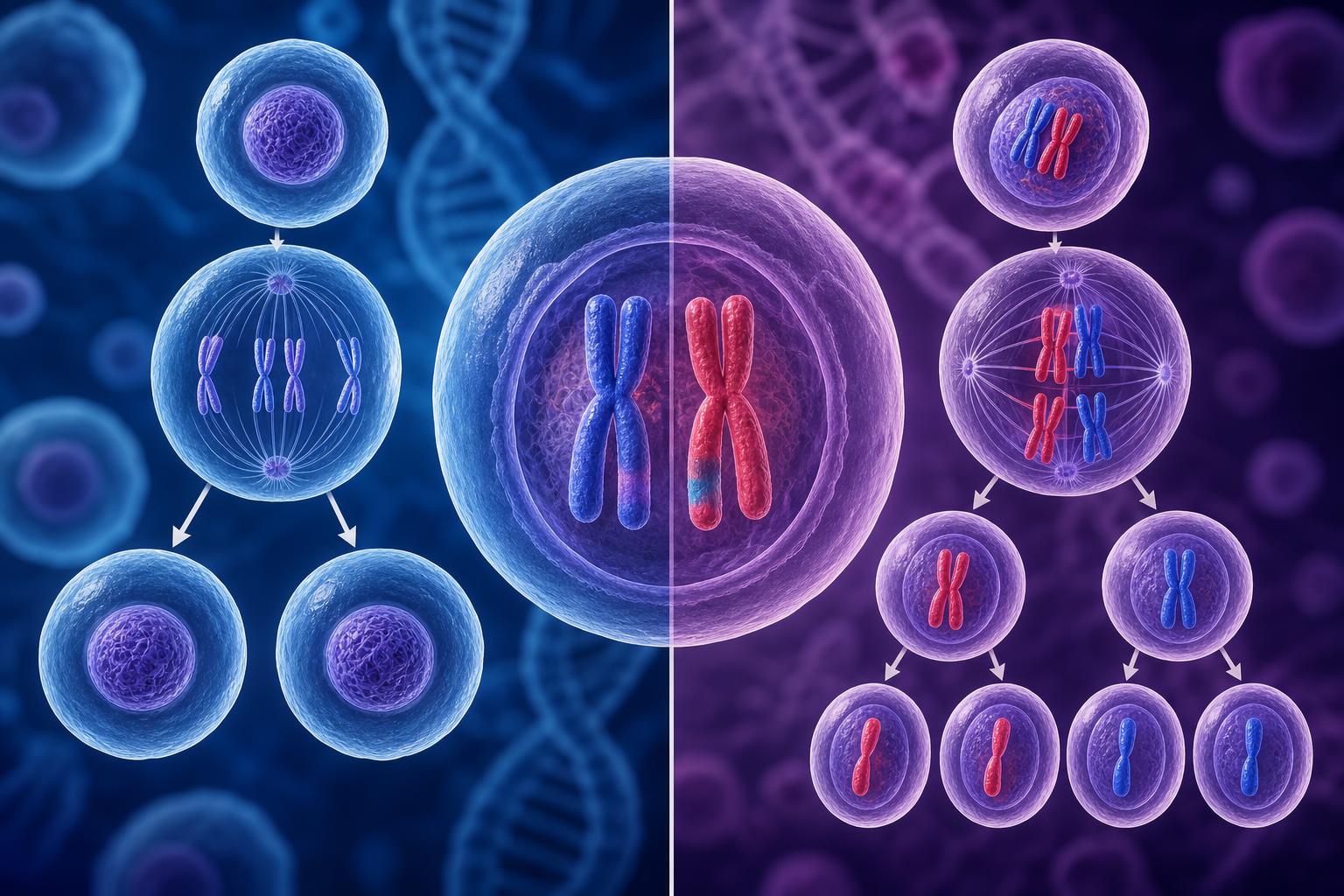
This mitosis and meiosis study guide explains how cells divide, why each process matters, and how to tell them apart on exams. Mitosis produces genetically identical body cells for growth, repair, and replacement, while meiosis produces genetically diverse gametes for sexual reproduction. Use these mitosis notes, meiosis summary points, flashcards, and quiz questions to review the stages, chromosome changes, and key vocabulary.
Key takeaways
- Mitosis produces two genetically identical diploid daughter cells from one parent cell.
- Meiosis produces four genetically different haploid cells used in sexual reproduction.
- DNA replication happens once before both mitosis and meiosis, during the S phase of interphase.
- Crossing over and independent assortment during meiosis create genetic variation.
- The main difference between mitosis and meiosis is the number of divisions, the chromosome number in daughter cells, and whether the cells are identical or varied.
What Is Mitosis?
Mitosis is the type of cell division used by eukaryotic organisms to grow, repair tissues, and replace old or damaged cells. Before mitosis begins, the cell goes through interphase, where it grows, performs normal cell functions, and copies its DNA during the S phase. Mitosis then separates the duplicated chromosomes into two nuclei. After cytokinesis, the cytoplasm divides and two daughter cells are formed. In humans, mitosis keeps the diploid chromosome number the same: one diploid parent cell with 46 chromosomes produces two diploid daughter cells with 46 chromosomes each.
Stages of Mitosis
Mitosis is commonly divided into prophase, metaphase, anaphase, and telophase. In prophase, chromatin condenses into visible chromosomes, the nuclear envelope breaks down, and spindle fibers begin to form. In metaphase, chromosomes line up along the middle of the cell at the metaphase plate. In anaphase, sister chromatids separate and move toward opposite poles. In telophase, new nuclear membranes form around each set of chromosomes. Cytokinesis usually follows, splitting the cytoplasm into two separate cells.
What Is Meiosis?
Meiosis is a specialized form of cell division that produces gametes, such as sperm and egg cells in animals. Unlike mitosis, meiosis has two rounds of division: meiosis I and meiosis II. DNA is copied once before meiosis begins, but the cell divides twice. The result is four haploid daughter cells, each with half the original chromosome number. In humans, meiosis starts with one diploid cell containing 46 chromosomes and produces four haploid gametes with 23 chromosomes each.
Stages of Meiosis
Meiosis I separates homologous chromosome pairs, while meiosis II separates sister chromatids. During prophase I, homologous chromosomes pair up in a process called synapsis, and crossing over can occur between non-sister chromatids. In metaphase I, homologous pairs line up at the cell equator. In anaphase I, homologous chromosomes separate, reducing the chromosome number. In meiosis II, the two cells divide again. Metaphase II lines chromosomes up individually, anaphase II separates sister chromatids, and telophase II plus cytokinesis produces four haploid cells.
Mitosis vs. Meiosis Summary
Mitosis and meiosis both begin after DNA replication and both use spindle fibers to move chromosomes. However, their purposes and outcomes are different. Mitosis is used for growth, repair, and asexual reproduction in some organisms, and it produces two identical diploid cells. Meiosis is used to make gametes for sexual reproduction, and it produces four genetically different haploid cells. Mitosis has one division, while meiosis has two divisions. Genetic variation is a major feature of meiosis because crossing over and independent assortment create new combinations of alleles.
Common Mistakes to Avoid
A common mistake is thinking chromosome number doubles after DNA replication. DNA is copied, but the chromosome count is usually based on centromeres, so duplicated chromosomes are still counted as chromosomes until chromatids separate. Another mistake is confusing sister chromatids with homologous chromosomes. Sister chromatids are identical copies of one chromosome, while homologous chromosomes are a pair with the same genes but possibly different alleles. Students should also remember that crossing over occurs in prophase I of meiosis, not in mitosis.
Flashcards
What is the main purpose of mitosis?
The main purpose of mitosis is to produce identical body cells for growth, repair, and cell replacement.
What is the main purpose of meiosis?
The main purpose of meiosis is to produce haploid gametes for sexual reproduction.
How many daughter cells are produced by mitosis?
Mitosis produces two daughter cells.
How many daughter cells are produced by meiosis?
Meiosis produces four daughter cells.
What happens during crossing over?
Crossing over is the exchange of DNA between homologous chromosomes during prophase I of meiosis.
What is the difference between diploid and haploid cells?
Diploid cells have two sets of chromosomes, while haploid cells have one set of chromosomes.
During which mitosis stage do chromosomes line up in the middle of the cell?
Chromosomes line up in the middle of the cell during metaphase.
What separates during anaphase I of meiosis?
Homologous chromosomes separate during anaphase I of meiosis.
Quiz
1. What is the final result of mitosis in a typical human body cell?
- A. Two genetically identical diploid cells
- B. Four genetically different haploid cells
- C. Two genetically different haploid cells
- D. Four genetically identical diploid cells
Show answer
Answer: Two genetically identical diploid cells
Mitosis keeps the chromosome number the same and produces two daughter cells that are genetically identical to the parent cell.
2. Which process produces gametes for sexual reproduction?
- A. Mitosis
- B. Meiosis
- C. Binary fission
- D. Cytokinesis only
Show answer
Answer: Meiosis
Meiosis produces haploid gametes, such as sperm and egg cells, that can combine during fertilization.
3. When does crossing over occur?
- A. Prophase I
- B. Metaphase II
- C. Anaphase of mitosis
- D. Telophase of mitosis
Show answer
Answer: Prophase I
Crossing over occurs in prophase I of meiosis when homologous chromosomes pair and exchange DNA segments.
4. What separates during anaphase of mitosis?
- A. Sister chromatids
- B. Homologous chromosome pairs
- C. Whole nuclei
- D. Gametes
Show answer
Answer: Sister chromatids
During anaphase of mitosis, sister chromatids are pulled apart and move to opposite poles of the cell.
5. Which statement best describes meiosis?
- A. It has two divisions and produces four haploid cells
- B. It has one division and produces two diploid cells
- C. It produces identical cells for tissue repair
- D. It occurs only in prokaryotic cells
Show answer
Answer: It has two divisions and produces four haploid cells
Meiosis includes meiosis I and meiosis II, resulting in four genetically different haploid cells.
6. What is independent assortment?
- A. The random arrangement of homologous chromosomes during meiosis I
- B. The copying of DNA before cell division
- C. The splitting of cytoplasm after nuclear division
- D. The repair of damaged body cells
Show answer
Answer: The random arrangement of homologous chromosomes during meiosis I
Independent assortment occurs when homologous chromosome pairs line up randomly during metaphase I, creating different chromosome combinations in gametes.
FAQs
What is the easiest way to remember mitosis vs meiosis?
Remember that mitosis is for making more identical body cells, while meiosis is for making gametes. Mitosis has one division and produces two diploid cells; meiosis has two divisions and produces four haploid cells.
Do both mitosis and meiosis start with DNA replication?
Yes. Both processes begin after DNA is replicated during the S phase of interphase. However, mitosis divides once, while meiosis divides twice after that single round of DNA replication.
Why is meiosis important for genetic variation?
Meiosis creates genetic variation through crossing over in prophase I and independent assortment in metaphase I. These processes generate gametes with unique combinations of alleles.
Next step
Turn this topic into a study session with notes, flashcards, and a practice quiz built from your own class material.

Leave a Reply